
Heading 6

RESEARCH AT SUSTAIN CDT
PHD PROJECT SHOWCASE
We are delighted to showcase our four-year PhD projects in the application of Artificial Intelligence to sustainable agri-food. Explore all our projects in more detail below.
Interested in being involved in future projects from an industry perspective? Please see our page For Industry, or contact us for more details: sustain@lincoln.ac.uk
2024 / 2025
SUSTAIN welcomed our first cohort of 8 students in 2024. Explore each project in detail below, or see our Advertised Projects for current opportunities.

Food Authentication Using Portable Sensors: Addressing Food Fraud and Food Mislabelling
Q1214
Student Researcher: Lauren Gilman
Supervised by: Prof Hui Wang, Queen's University Belfast; Prof Louise Manning, University of Lincoln
Worried about food fraud and mislabelling? You're not alone. These issues erode consumer confidence in the agri-food system, leaving us questioning the authenticity of what we eat...
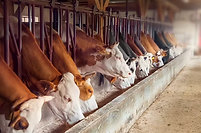
Advanced Video Processing to Optimise Feeding of Livestock in Farms
S1102
Student Researcher: James Nelson
Dr Paul Murray, University of Strathclyde; Prof Ilias Kyriazakis, Queen’s University Belfast; Prof Christos Tachtatzis (University of Strathclyde)
A key contributor to the GHG footprint of milk production is associated with animal feedstock, which, if not optimised for each animal, can lead to increases in CH4...
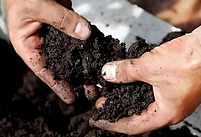
Nature-based Solutions for Restoration of Degraded Soils in Sub-Saharan Africa
A1109
Student Researcher: Dominick Bittner
Prof Jo Smith, University of Aberdeen; Prof Anil Fernando, University of Strathclyde; Prof Georgios Leontidis, University of Aberdeen; Getahun Yakob, Southern Agricultural Research Institute (SARI), Ethiopia (Industry Supervisor), Moses Kimani, Lentera Ltd, Kenya (Adviser)
Natural systems are underpinned by soils, and nature and soils are mutually inter-dependent. This balance has been disrupted by our uses for land in climatically vulnerable regions...

Transparent Carbon Footprint Quantification and Reporting in Agriculture
A1107
Student Researcher: Alisa Holm
Supervisors: Dr Milan Markovic, University of Aberdeen; Dr Paul Williams, Queen’s University Belfast; Dr Matthias Kuhnert, University of Aberdeen; Karl H Richter, iSumio Ltd
Agriculture, responsible for 10% of global greenhouse gas emissions, holds significant potential for negative emissions, particularly in soil carbon sequestration...

Machine Learning Crop Breeding in Precision-Controlled Vertical Farming for a Sustainable Future
A1106
Student Researcher: Athinoulla Konstantinou
Professor Georgios Leontidis (University of Aberdeen), Dr Aiden Durrant (University of Aberdeen), Dr Mamatha Thota (University of Lincoln), Professor Derek Stewart (Advanced Plant Growth Centre, The James Hutton Institute), Dave Scott (Intelligent Growth Solutions - Industry Advisor)
In response to the critical challenge of climate change, this PhD addresses the imperative for innovative crops and production systems in vertical farming...

Service Robots Interventions Promoting More Sustainable Buyers’ Choices in Supermarkets
L1218
Student Researcher: Aura Anderson-Ross
Dr Francesco Del Duchetto, University of Lincoln; Dr David McBey, University of Aberdeen; Dr Leonardo Guevara, University of Lincoln
Promoting sustainable and healthy diets in the population is an important promising direction to alleviate the burden on the environment of current food production and consumption practices...

Robotics and AI to Support Scalable Agronomy (RAISSA)
L1103
Student Researcher: Villanelle O'Reilly
Prof Marc Hanheide, University of Lincoln; Prof Georgios Leontidis, University of Aberdeen
The "Robotics and AI to Support Scalable Agronomy (RAISSA)" PhD addresses the pressing need for sustainable and efficient agricultural practices by using Robotics and AI...

Intelligent, Energy-efficient De-leafing for the Soft Fruit Industry
L1101
Student Researcher: Jack Davis
Prof Elizabeth Sklar, University of Lincoln; Prof Greg Keeffe, Queen’s University Belfast; Sarah Palmer, Driscolls Genetics Limited (Industry Supervisor)
The overarching aim of this project is to develop intelligent methodologies that can inform and improve the 'de-leafing' process for the soft fruit industry, as well as measure the energy usage...
2025 / 2026
The academic year 2025 / 2026 saw SUSTAIN's second student cohort use AI and deep learning to investigate topics ranging from visual tracking of animals to decarbonising the dairy industry. Explore each project in detail below, or see our Advertised Projects for current opportunities.

Trade-offs in land use: Utilising argumentation theory and dialogue to optimise for net-benefits
L1216
SUSTAIN Student: Georgie Fletcher
Dr Daniel Magnone, University of Lincoln; Prof Nir Oren, University of Aberdeen; Prof Simon Parsons, University of Lincoln
The UK’s land use can be considered a complex, multiobjective optimisation problem, balancing economic yield, biodiversity enhancement, and carbon storage. With the recent introduction of the Environmental Land Management Scheme (ELMS)...

AR2MS – Automated Robotic Rapid evaporative ionisation mass spectrometry Meat Sampling
L1216
SUSTAIN Student: Albor Meha
Dr Athanasios Polydoros, University of Lincoln; Dr Nick Birse, Queens University Belfast; Prof Mark Swainson, University of Lincoln
Meat continues to be a vital source of protein for many people. As awareness grows about the environmental impacts of meat production, consumers are increasingly seeking meat that is not only high quality but also produced with lower environmental impacts...

Harnessing AI Tools and DNA-based Monitoring to Enhance Arthropod Biodiversity Assessments
L1216
SUSTAIN Student: Arkan De Lomas
Dr Karen Siu Ting, Queens University Belfast; Prof Christos Tachtatzis, University of Strathclyde
Arthropods play critical roles in forest ecosystems, from pollination to decomposition. In commercial forests like spruce, pine, and larch, they influence ecological balance and productivity...

Machine Learning and AI Approaches to Investigate Post-Weaning Diarrhoea and Antimicrobial Resistance in Piglets
L1216
SUSTAIN Student: Becca Morrell-Tomiczek
Dr Linda Oyama, Queens University Belfast; Dr Mingjun Zhong, University of Aberdeen; Prof Ilias Kyriazakis, Queens University Belfast
Using machine learning and Bayesian analysis to investigate how zinc oxide affects piglets’ gut microbiomes, post-weaning diarrhoea and antimicrobial resistance.

Harnessing Explainable AI to Identify Key Microbial Drivers of Reduced Ruminant Greenhouse Gas Emissions
L1216
SUSTAIN Student: James Barnard
Prof Chris Creevey, Queens University Belfast; Dr Robert Atkinson, University of Strathclyde
Microbes form stable communities by each taking on unique roles based on their genes, a process known as niche specialization. These communities can significantly impact their hosts...

Machine Learning and Bayesian Modelling Approaches for Big Data in Beef Agriculture & Food Production
L1216
SUSTAIN Student: Videsh Jagroo
Dr Arran Hodgkinson, Queens University Belfast; Dr Mingjun Zhong, University of Aberdeen; Prof Ilias Kyriazakis, Queens University Belfast
Machine learning (ML) is an invaluable modern technique whose insights, leveraged against large-scale databases tracking agricultural practices and outcomes, could radically change farming practices...

Multi-Object Visual Tracking (MOT) of Animals in Agriculture
L1216
SUSTAIN Student: Yiyuan Wang
Dr Niall McLaughlin, Queens University Belfast; Prof Christos Tachtatzis, University of Strathclyde; Prof Ilias Kyriazakis, Queens University Belfast
This project aims to improve the performance of artificial intelligence-based video analytics in agriculture by developing and applying novel methods for Multi-Object Visual Tracking (MOT)...

A Machine Learning Accelerated Spectral Matching Algorithm to Identify Harmful Algal Blooms and Other Threats
L1216
SUSTAIN Student: Adam Hale
Prof David McKee, University of Strathclyde; Prof Paulo A. Prodöhl, Queens University Belfast; Prof Paul Murray, University of Strathclyde
Aquaculture is a vital economic driver (USD $313 billion in 2022) and a key protein source for a significant portion of the global population, making it essential for enhancing global food security...

AI for the Decarbonisation of the Dairy Sector: Heat Recovery and Energy Harvesting
L1216
SUSTAIN Student: John Callaghan
Prof Lina Stankovic, University of Strathclyde; Prof Tom Jefferies, Queens University Belfast; Prof Vladimir Stankovic, University of Strathclyde
As highlighted in the DEFRA Agri-climate report 2023, the UK agricultural sector has seen a steady decrease in NOx and methane emissions between 1990 and 2021, but significant 22% increase in CO2 emissions during the same period...
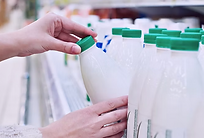
Milk (Mid-Infrared) MIR Spectral Deep Learning Neural Network as a Classifier Model for GHG Emission Profiles in Dairy Cattle
L1216
SUSTAIN Student: Abena Nkansah
Prof Craig Michie, University of Strathclyde; Prof Chris Creevey, Queens University Belfast
The project focuses on using artificial intelligence (AI) in the dairy sector to identify novel traits with strongest degrees of biological connection to Green House Gas (GHG) emissions from animals...

Artificial Intelligence for Satellite Assessment in Grassland Ecosystems (AI-SAGE)
L1216
SUSTAIN Student: Poppy Ferguson
Dr Robert Atkinson, University of Strathclyde; Dr Lan Qie, University of Lincoln; Prof Christos Tachtatzis, University of Strathclyde
Satellite Earth Observation (EO) Data has emerged as a game-changer in accurately assessing plant biodiversity and ecosystem functions within agricultural landscapes, spanning both grassland and arable terrains...

Investigating Sustainable Net-Zero Farming Using Machine Learning
L1216
SUSTAIN Student: Jack MacKenzie
Prof Vladimir Stankovic, University of Strathclyde; Dr Matthias Kuhnert, University of Aberdeen; Prof Lina Stankovic, University of Strathclyde
The agri-sector, especially dairy farming, is a major contributor to greenhouse gas (GHG) emissions with 18% of annual worldwide GHG emissions attributed to animal farming...

Clear and Sound: Combining Image Analysis and Bioacoustics to Link Pollinator Traffic with Fruit Set and Harvest
L1216
SUSTAIN Student: Maddison Parkhouse
Dr Roslyn Henry, University of Aberdeen; Dr Fabio Manfredini, University of Aberdeen; Prof James Windmill, University of Strathclyde; Prof Georgios Leontidis, University of Aberdeen
Insect pollinators provide fundamental ecosystem services to wild plants and commercial crops, promoting the transfer of pollen between flowers and across plants. Bees are some of the most important pollinators worldwide...

Computer Vision and Multimodal Approaches to Automate Bud Detection and Yield Forecasting of Medicinal Cannabis
L1216
SUSTAIN Student: Seyi Ibigbemi
Dr Tryphon Lambrou (University of Aberdeen), Prof Georgios Leontidis (University of Aberdeen), Dr Aiden Durrant (University of Aberdeen), Dr Oorbessy Gaju (University of Lincoln)
The production of medicinal cannabis in a controlled environment is a complex, multi-stage process which requires detailed and frequent crop monitoring to protect both plant health and the quality of the resulting product...


